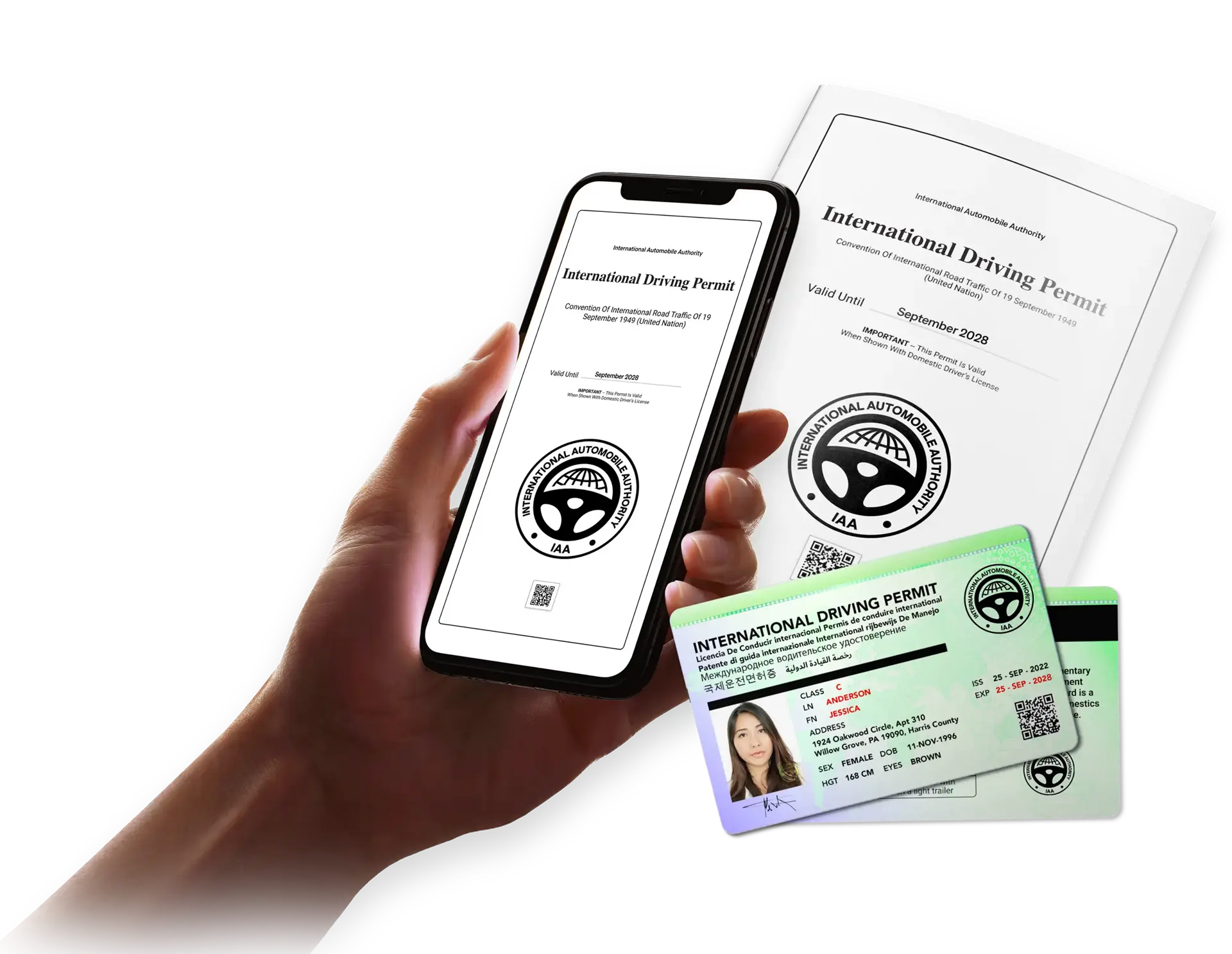


Planning to drive through the lavender fields of Provence, navigate the winding coastal roads of the French Riviera, or explore the châteaux of the Loire Valley? Understanding France's driving documentation requirements is essential before you pick up rental car keys or cross the border in your own vehicle.
The question of whether France requires an international driver's license—more accurately called an International Driving Permit (IDP)—depends on several factors, including your country of origin, the duration of your stay, and whether you're renting or driving your own vehicle. This guide breaks down everything you need to know about driving legally in France as a foreign visitor.
Understanding France's Official Driving Requirements for Foreign Visitors
France, as a member of the European Union, follows specific regulations regarding foreign driving licences. The requirements differ significantly based on where your licence was issued.

For EU and EEA licence holders: If you hold a valid driving licence from any European Union member state, Iceland, Liechtenstein, Norway, or Switzerland, you can drive in France without any additional documentation. Your national licence is fully recognised and legally valid throughout your stay, whether short-term or permanent.
For non-EU licence holders: The situation becomes more nuanced. France officially accepts foreign driving licences from non-EU countries for short-term visits, typically up to one year. However, French authorities may request that your licence be accompanied by an official French translation if it is not written in French or does not conform to the format established by the 1968 Vienna Convention on Road Traffic.
An International Driving Permit serves as an official translation of your licence into multiple languages, including French. France is a signatory to both the 1949 Geneva Convention and the 1968 Vienna Convention on Road Traffic, which establish the legal framework for international driving documents.
It's important to note that an IDP is a government-issued document that must be obtained in your country of residence before travelling. For detailed information about international driving requirements in France, always verify current regulations with official French authorities, as rules can change.
Rental Car Company Policies in France
Even when French law may not strictly require additional documentation, rental car companies often impose their own policies that go beyond legal minimums. These policies vary by company and can change without notice.
Major international rental agencies operating in France—including Hertz, Avis, Europcar, and Sixt—each maintain their own documentation requirements. Many rental companies request that drivers from non-EU countries present either an IDP or an official translation of their licence alongside the original document.
Common rental company requirements may include:
- A valid driving licence held for a minimum period (often one or two years)
- An IDP or certified translation for licences not in Latin script
- An IDP or certified translation for licences not in French, English, or German
- Proof of identity such as a passport
- A credit card in the main driver's name
Before booking, always check the specific requirements on your chosen rental company's website or contact them directly. Policies can differ between booking platforms and change based on your licence's country of origin. Understanding what documentation you may need helps avoid unpleasant surprises at the rental counter.
Some travellers have reported being denied vehicle pickup because their licence was in a non-Latin script without accompanying translation, even when they believed they met all legal requirements. While this isn't universal, having proper documentation reduces the risk of complications.
Who Needs a Translation or IDP for Driving in France?
Whether you need supplementary documentation depends primarily on your licence's country of issue and the language in which it's written.

Drivers who typically don't need additional documentation:
- EU and EEA licence holders
- Swiss licence holders
- Holders of licences that conform to the Vienna Convention format and include French text
Drivers who may need an IDP or certified translation:
- Licence holders from countries outside the EU/EEA
- Those with licences written in non-Latin scripts (Arabic, Chinese, Japanese, Korean, Russian, Thai, etc.)
- Visitors planning to rent vehicles from agencies with strict documentation policies
- Long-term visitors approaching the one-year residency threshold
The distinction between a government-issued IDP and a certified translation is crucial. An IDP is an official document issued by authorised automobile associations in your home country, following international treaty standards. A certified driver's licence translation, while not a government-issued IDP, provides an accurate translation of your licence details that may satisfy rental company requirements and aid communication with local authorities.
A certified translation does not replace any legally required IDP, your original driving licence, or rental company approval. It serves as a supplementary document that makes your licence information accessible in the local language. Acceptance depends entirely on local law, individual rental company policies, and the discretion of authorities.
Practical Tips for Driving in France as a Foreign Visitor
Beyond documentation, driving in France involves understanding local regulations and customs that differ from other countries.
Essential documents to carry:
- Your original, valid driving licence (always required)
- An IDP or certified translation if applicable to your situation
- Your passport or national identity card
- Vehicle registration documents
- Proof of insurance (green card for non-EU vehicles)
- Rental agreement if applicable
Key French driving regulations:
- Drive on the right side of the road
- Priority is given to vehicles approaching from the right at unmarked intersections (priorité à droite)
- Carry a warning triangle and reflective vest in your vehicle
- Headlights must be used in poor visibility conditions
- Blood alcohol limit is 0.05% (lower for new drivers)
If you're planning a broader European road trip that includes neighbouring countries, documentation requirements can vary. For instance, requirements for driving in Germany or driving in Austria may differ from France, so research each destination individually.
French police can request to see your driving documentation during routine checks or traffic stops. Having clear, readable documentation in French can facilitate these interactions significantly.
Frequently Asked Questions
Can I drive in France with just my US or UK licence?
UK licence holders can currently drive in France on their UK licence for visits. US licence holders can legally drive in France for short-term visits, though French authorities and rental companies may request an IDP or official translation, particularly if your licence isn't in French. Requirements can change, so verify current rules before travelling.
How long can I drive in France with a foreign licence?
Generally, visitors can drive in France using their foreign licence for up to one year. After establishing residency, you may need to exchange your licence for a French one, depending on your country of origin and any bilateral agreements between France and your home country.
What's the difference between an IDP and a certified translation?
An International Driving Permit is a government-issued document obtained from authorised organisations in your home country, following international treaty standards. A certified translation is a professional translation of your licence that accurately conveys your licence information in another language. While both serve translation purposes, only an IDP carries official government backing under international conventions.
Will rental companies in France accept a certified translation instead of an IDP?
Policies vary by company and can change. Some rental agencies may accept a certified translation as proof that your licence information has been accurately translated, while others specifically require a government-issued IDP. Always confirm directly with your rental company before booking, and understand that acceptance is never guaranteed.
Do I need an IDP if my licence is in English?
French law doesn't specifically exempt English-language licences from translation requirements for non-EU visitors. However, many rental companies are familiar with English-language licences from common tourist countries. The necessity often depends on the rental company's policies and the discretion of any authorities you may encounter.
Prepare Your Documentation Before You Travel
Navigating France's driving requirements doesn't have to be complicated. By understanding the distinction between legal requirements and practical necessities, you can ensure a smooth experience whether you're renting a car in Paris or driving your own vehicle across the border.
Remember that rules and policies evolve. Always verify current requirements with official French government sources, your country's embassy or consulate, and your chosen rental company before travelling. Having proper documentation not only helps you comply with regulations but also provides peace of mind throughout your journey.
Get your certified driver's licence translation — accepted in 180+ countries, delivered digitally. Please note that acceptance depends on local law, rental company terms, and cannot be guaranteed. A certified translation does not replace any legally required IDP or your original driving licence.